
Ciberseguridad can feel like a moving target. New threats, new software, new employees, new everything. Most business owners we talk to aren’t wondering if they need better protection; they’re wondering what they have is actually working.
You don’t have to be a cybersecurity expert to start answering that question. A good place to begin is by looking at the basics and asking the right questions.
This Cybersecurity Awareness Month, we’re taking a closer look at 10 questions we ask businesses every day, the same questions we’d ask if we were sitting across the table from you.
-
Do you know what you need to protect?
Before you can protect your business, you need to know what you’re protecting.
Think beyond computers and servers. Your business may rely on customer information, financial records, employee data, email accounts, cloud applications, payment systems, intellectual property and other critical information.
Make a list of the systems and information your business depends on most. Then ask, “What would happen if we suddenly couldn’t access this?”
That question can help you prioritize where your cybersecurity efforts should be focused.
-
Do you know where your biggest vulnerabilities are?
You don’t have to wait for a cyberattack to discover a weakness. Regular vulnerability assessments can help identify areas of your technology environment that may need
attention. That could include outdated software, unsecured devices, weak access controls, or other potential entry points.
As your business grows and changes, so can the risks you face. Regularly identifying and addressing potential gaps can help you stay ahead of emerging threats.
If you want to dive deeper into this, register for our free webinar on Tuesday, October 27th.
-
Are you using multiple layers of protection?
There isn’t one cybersecurity tool that can stop every threat. That’s why a layered approach matters.
Your security strategy may include firewalls, endpoint protection, email security, multi-factor authentication, backups, employee training, monitoring, and other safeguards.
Think of each layer as another opportunity to stop a threat before it reaches something important. If one layer fails, another may still be there to help protect your business.
-
Who has access to your business’s most sensitive information?
Not everyone needs access to everything. Take a look at who can access your most sensitive systems and information. Are employees only accessing what they need to do their jobs? Are former employees still listed on accounts? Do vendors or contractors have access they no longer need?
This matters even more if your team includes seasonal help, part-timers or contractors who come and go. It’s an easy thing to lose track of, and an easy gap for someone to slip through.
It’s worth reviewing access regularly, especially when employees change roles or leave the company.
-
Are you using strong authentication?
A username and password alone may not be enough to protect important accounts.
Multi-factor authentication, or MFA, adds another layer by requiring users to verify their identity in more than one way. If an attacker gets hold of a password, MFA can provide an additional barrier between that compromised credential and your business.
Take a look at your most important accounts and ask, “Where can we add another layer of verification?”
What the short version of all this? Skip ahead and download our 10 question checklist.
-
Do your employees know what a cyber threat looks like?
Your employees interact with your technology every day. That makes cybersecurity awareness an important part of your overall security strategy.
We’re not saying your whole team needs to become IT experts. Employees should know how to recognize suspicious emails, links, attachments, websites, messages and requests for sensitive information. Just as importantly, they should know what to do when something doesn’t feel right.
You also shouldn’t expect employees to catch every threat, however, you should give them the knowledge and confidence to ask questions and report something suspicious.
-
Are you prepared for more than phishing emails?
Phishing is one of the threats most businesses are familiar with and it can happen in many forms. A suspicious request might arrive through email, text message, social media or even a phone call.
Someone could impersonate an executive, vendor, customer or technology provider and attempt to convince an employee to share information, transfer money or bypass normal procedures. Cybersecurity awareness needs to extend beyond the inbox.
And as artificial intelligence (AI) makes impersonation and other scams increasingly convincing, it’s more important than ever for employees to know how and when to verify a request.
This is an area we’ll explore more during our upcoming Cybersecurity Awareness Month webinar.
-
Would you know if something suspicious was happening right now?
Prevention is important, but it’s not the entire equation. Businesses also need visibility into what’s happening across their technology environment.
Security monitoring can help identify suspicious activity and potential threats that might otherwise go unnoticed. That’s especially true for businesses without a dedicated IT department watching things around the clock.
If something suspicious happened tonight, would you know about it and would you know what to do next?
-
Do you have a plan if something goes wrong?
Even strong security practices can’t guarantee that an incident will never happen. That’s why it’s important to have a plan for what happens after something goes wrong.
Who should your employees contact? Who makes decisions? Which systems should be disconnected? How will you communicate with customers or employees? How will you recover critical information?
You don’t want to figure this out for the first time during an attack at 11 p.m. A simple incident response plan can give your team a starting point when every minute matters.
-
When was the last time you reviewed your cybersecurity strategy?
Your business probably looks different today than it did a year ago. Maybe you’ve added new employees, started using new software, opened another location or brought on new vendors. Each change can create new security considerations.
That’s why it’s worth taking a fresh look at your cybersecurity practices from time to time. Review who has access to what, whether your employees have the training they need, what technology you have in place and whether your team knows what to do if something goes wrong.
Cybersecurity isn’t something you check off a list once and forget about. It should grow and change with your business.
So, Where Does That Leave You?
If a few of these questions left you with more “I’m not sure” than “yes“, don’t panic.
That’s exactly why asking the questions matters. You don’t have to fix everything overnight. Start by identifying your biggest gaps and prioritizing the areas that could have the greatest impact on your business.
And you don’t have to figure it out alone, this is exactly the kind of thing our team fields questions about every day, usually from someone who just wants a straight answer from a person they can actually reach.
Want an actual score, not just a gut check?
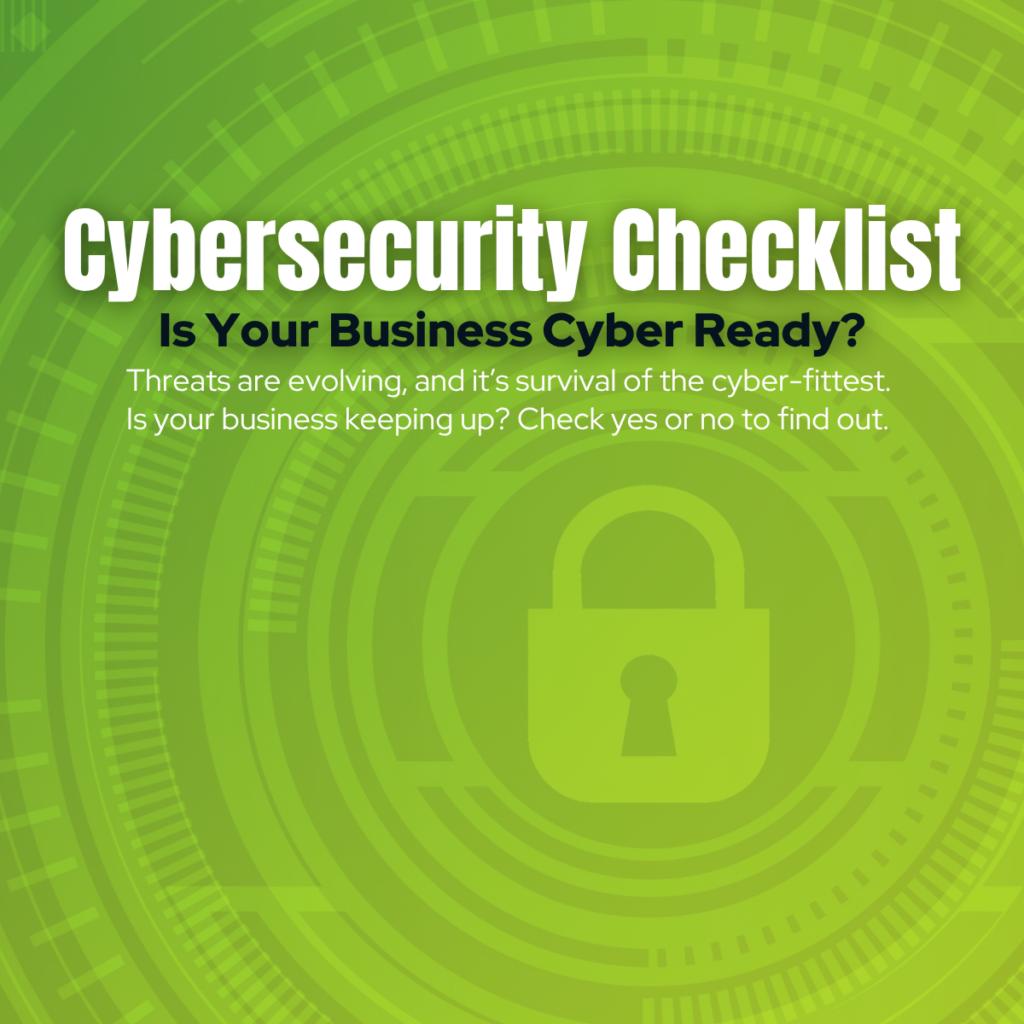
Download ALLO Business’s Cybersecurity Checklist and turn these 10 areas into 10 simple yes-or-no questions, scored from Future-Ready to time-to-evolve-fast.
[DOWNLOAD THE CYBERSECURITY CHECKLIST →]
Cybersecurity Doesn’t Stop Here
The fundamentals are important, but today’s threat landscape continues to evolve. Phishing emails and ransomware aren’t the only risks businesses need to consider. A scam might come through a phone call, a convincing impersonation or a request that seems legitimate at first. And with AI, these tactics can be even harder to recognize.
That’s the conversation we’re continuing this Cybersecurity Awareness Month.